Different routes to the Bar
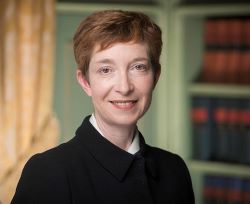
Ruth Crawford, KC, Treasurer at the Faculty of Advocates
I called to the Bar in 1993, at the ripe old age of 28. I have never regretted that career choice although I took a few years to get there.
I don’t know why I alighted on law as a profession. No-one in my family has a legal background. My father was an MP in the 1970s and my mother a journalist. My university applications were a mix between law and journalism/English. Perhaps I chose law simply because my first offer was for the LlB at Aberdeen University.
I do recall a day trip to the Court of Session in my DipLP year. I immediately felt that this was what I wanted to do, no doubt helped when members of Faculty took us students to the pub! Although drinking habits may have changed, Faculty retains its collegiality. But first I had to do my traineeship. In the course of that I was very fortunate to appear in the Sheriff Court on a regular basis as a second-year trainee and then post-qualification. This confirmed that a career at the Bar was what I wanted to do.
In my final years at school I was one of about eight girls in a year group of 100-plus boys, so I am no stranger to being in a minority. The ratio improved when I went to university in the 1980s but women were still in a minority of those studying law. I was the only female trainee in a cohort of 4 trainees. And women in my year of call – 1993 – were also under-represented. But we were inspired by the brilliant female advocates in practice at the time. They know who they are. I won’t embarrass them by name, but they demonstrated on a daily basis that women are, of course, just as good Advocates in all areas of the law as their male colleagues.
Maybe having been a woman in a “man’s world” for most of my life has closed my eyes to stereotypes and lazy gender assumptions. My career at the Bar has not played to that tune. I initially had a general civil practice. I appeared on my own in my first year or so of call in the Inner House arguing (and winning) a point of statutory construction. That was around the same time as a judicial review where the Judge, having just read the then new “toy” of Pepper v Hart, wanted to know what was said in Hansard about a housing Bill and sent me off to do some overnight homework (this was a very late night as there were no online data bases or research tools at the time). These two cases sowed the seed of my interest in public law. I had the lucky break to be appointed an amicus curiae on a couple of occasions. From there I was appointed standing junior counsel to the Registers of Scotland, which led to many interesting cases – both factually and legally. Post-devolution I was appointed second standing junior counsel to the Scottish Government. I had a year “out” from that to appear for various local authorities in a public inquiry about the construction of an EHV line from Beauly to Denny. Since taking silk in 2008, I have continued to practice in the field of public law, with a particular interest in planning and public procurement. I have appeared in high profile and significant cases, including in the Supreme Court, which have tested all my skills and experience. Outside of court, I had the great honour to be elected Treasurer of Faculty in 2020. Throughout, I have sought to show in words and deed that Faculty is open and welcome to all those who, just like me many years ago, thought that a career, at the Bar is for them. It is.
I have been surrounded by gowns, and sometimes wigs, ever since I was a young boy. I entered foster care when I was four years old. Throughout my childhood, my life was intermingled with solicitors, Children’s Hearings and appeals. I even remember being nine years old and having senior counsel sitting in my living room. My childhood solicitor recently told me that I had once proclaimed to her that I would be doing her job when I was older – it turns out that that little boy was right.
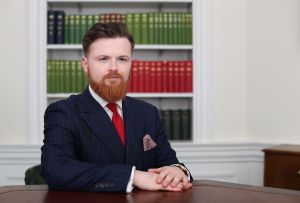
I spent most of my early years being moved all over the country – changing homes every year, if not every few months. It was only when I was about 11 that I found a long-term foster family, who worked well beyond expectations to ensure that I maintained a strong relationship with my own family and that I could be supported in my education.
I went to university to study law straight after high school. There is a lot to be said for the reforms to the care system in Scotland, which allowed me to do that effectively, with bursaries and extra funding being available to care-experienced persons nowadays. I had no financial support from parents, but I did have foster parents and a dedicated social worker who all went the extra mile to assist me.
I was able to live independently and enjoy a student experience that was relatively normal. I was even able to study abroad, which would have been unthinkable had I sought to do that 10 years earlier. Not long after that I started a PhD course at the University of Glasgow in Public Law and Constitutional Theory (with the assistance of the local authority and the Clark Foundation for Legal Education). As a researcher, I was able to publish in academic journals and present at international conferences on public law. In the middle of my PhD studies, I began working as a trainee solicitor.
Throughout all of this, I became friends with an advocate who had been encouraging me to apply for a scholarship and come to the Bar. I was quite reticent about this at that time. I was still a trainee solicitor, my wife and I were expecting a little boy, and I had no parents to fall back on for extra help. Without a scholarship, I would not have been able to afford to call to the Bar while supporting my family.
In the end, I was awarded the Lord Reid Scholarship. Only one of these scholarships, funded from a bequest from the late Lord Reid, is awarded annually to the most outstanding candidate. I began devilling a year later. Devilling is a rewarding experience. While it often feels like you are starting again at square one, the formation offered by Faculty is top-tier and transformative. It must also be said that, for those devilling with children at home, it is often a challenge for the whole family. My wife did the lion’s share of the work needed to make it all happen.
I can safely say that calling to the Bar has been one of the best decisions of my life. It has offered me a career which is exciting and intellectually stimulating. It has brought a degree of flexibility that I would not otherwise have known in private practice. Most of all, it has offered me access to a supportive and collegiate community of colleagues who are ready to help in times of need. That is not to say life at the Bar is always rosy – advocates work hard to do well. But on balance, it has been a wholly fulfilling experience, and the support available has exceeded all my expectations.
I have established a busy practice in commercial, tax and public law disputes, while also tutoring students undertaking a commercial litigation diploma course at the University of Edinburgh, and maintaining an academic career in constitutional theory at the University of Glasgow.
Those from a care-experienced background who wish to become advocates should not be discouraged. This career is accessible to everyone willing and able to put in the hard work, and the financial support offered by Faculty’s scholarship programme is on hand to promote equality and diversity at the Bar.
I called to the Bar in 2011, and I practice in family law. I am wholly reliant on hearing aids. I have a congenital hearing loss and an acquired hearing loss that occurred when I was aged about three years old when I contracted whooping cough. I also have “elevated pitch” so I can hear the sounds that most people cannot. The sounds lights make. Every computer shrieks at me.
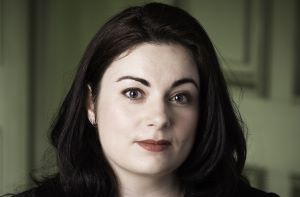
I spent my early life not really understanding my hearing loss; I was often in trouble with my teachers for not paying attention, but I was a good pupil. A clever teacher realised that there was something awry and my hearing loss was diagnosed shortly thereafter. I was actually significantly deaf.
I didn’t know what I couldn’t hear. I did my best with what I could. I struggled to hear and struggling to hear takes a great deal from you; it can be exhausting, physically painful and it takes a lot of effort. Deaf people can be hypervigilant of their surroundings and sharp or very loud noises can startle us. My world is not totally silent and hearing aids can amplify sounds that you really do not need nor want to hear such as the blood rushing around your head. Not being able to hear is isolating and it can be frightening.
I graduated with a law degree from Edinburgh in 2004 after having graduated with a degree in psychology, and I knew where I wanted to be: I wanted to be an advocate. When I first approached Faculty about devilling in 2009, I made it clear that I had a significant hearing loss. It is not something that I am ashamed of and I was met with nothing but acceptance. As a Devil, my needs were fully acknowledged and equipment procured to assist me throughout the training courses. I do sometimes struggle in court but in my experience, once judges are aware of my issues they are more than accommodating. My practice was more submission based and I tended to appear in smaller courts where I was directly facing the sheriff or judge which greatly assisted me. However, when I accepted a commission as an Advocate Depute, that all changed. The courts in Lawnmarket and Saltmarket can be vast and the judge and, more importantly, the witness, can be very far away from the lectern. My practice of “making do” with my hearing aids was no longer enough. Thankfully, my issues were taken seriously and specialist microphones and equipment were purchased for me by Crown Office. These are nothing short of a lifeline for me and it has made me far more effective than I ever thought I could be.
Technology is forever moving forward and hearing aids are constantly being improved upon. A friend one asked me if wearing hearing aids is like “contacts for your ears” to which the answer is a resounding no. Hearing aids are tailored to each wearer but they are imperfect and somewhat fragile. Getting caught in the rain can cause them to buzz and fizz. Hearing aid loops are more science fiction than fact and they seldom work. My audiologist told me that they were designed for post office counters and bank tellers and not for huge courtrooms and in all of my years of wearing hearing aids I am still unclear as to what the “t switch” is!
My hearing issues have been a huge barrier to me in many ways but Faculty have responded well to my needs and made accommodations for me as far as possible. Noise can be complex and my needs can be too, but I have received nothing but unwavering support from the Faculty of Advocates.
I called to the Bar in June 2024 after completing a training contract with an international commercial firm in Edinburgh.
But backing up to the start of my life before that. My family moved from Malaysia to Scotland when I was four years old. It took everyone a while to adjust and learn the language, but we slowly got there. Navigating life as an ethnically Chinese person was hard.
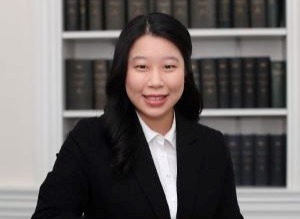
There were very few people who looked like me or could relate to my background growing up. People struggled to understand cultural differences and my (different) points of view.
Not letting those differences get to me, I quickly developed an interest in the law and particularly litigation. I was able to develop this further during my undergraduate LLB and Diploma, winning overall best student awards in both degrees. I went on to train at a commercial law firm during which I was able to help law students, particularly those from similar backgrounds, to break into legal careers through my blogging, webinars, and mentoring programmes. For example, helping students navigate through a system they were unfamiliar with and in a language that is not their first - something very close to my heart.
So, there is no secret that I’m from a working-class, immigrant, ethnic minority background and state-school educated. While I was keen to come to the Scottish Bar, I was not always sure that the Scottish Bar was a diverse environment that would accept me. However, since starting my journey here, I have been overwhelmed with support from the Faculty of Advocates, my stable Ampersand Advocates, and members. There are committees dedicated to increasing diversity and a real openness to listen and try new ideas. Faculty also offers a range of scholarships to help with the financial burden of coming to the Bar and increase the diversity of the Bar. I’m very grateful to be in receipt of the Lord Hope scholarship and the Faculty scholarship, both of which have gone a long way in supporting my journey at the Bar. Coming from my background, I can more widely appreciate differing views, driven by various concerns, pressures and tensions. That remains an advantage I have in my practice as an Advocate.
Coming from an underrepresented background ought not to prevent talented individuals coming to the Bar. If you think you would like a career at the Bar, please don’t hesitate. It is a supportive and collaborative environment, and my decision to come to the Bar is one I will never look back on.
The Bar is a congenial workplace for persons of all kinds of backgrounds, where civility governs all relations between members, and respect depends purely on a member’s industry, acuity and ethics.
I hail from about as far from Edinburgh as is possible within Britain, but despite having no connections at all with Faculty through family or friends, it has always been obvious that only professional ability and good faith matter in Parliament House.
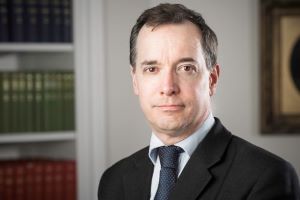
My roots are in the Home Counties of England, yet in the Faculty of Advocates I have never encountered any prejudice against its small minority of English members.
Statistically my career path to the Bar is one that is unusual today, because it was via Oxford University and a Bar apprenticeship. The great majority of members have first qualified as solicitors, but intending intrants can be confident that coming to Faculty through an apprenticeship without qualifying or working as a solicitor need be no impediment.
Ethnically my Englishness is diversified by the foreign blood of my Danish mother, through whom I can boast four members of our immediate family who as members of the Danish Resistance personally fought against fascism – thereby exemplifying the absence of any need of a conventional Scots background in order to thrive as a north British advocate.
Churchgoers are a minority today and perhaps also at our Bar, but again I hope I can serve as an example that loyalty to Christianity is part of the valued diversity which Parliament House celebrates. Politically, too, all decent points of view are accorded mutual respect. If like me you are a classical liberal by principle, and sometime Conservative voter, you will find no more tolerant a professional home than the Advocates’ Library.
Baroness Smith of Cluny KC, Advocate General for Scotland
There are lots of different types at the Bar. The first person I spoke to on my devilling course explained to me he was only doing it because he didn’t get onto the clowning course he had applied for.
There are also lots of routes to call to the Bar. I had, for example, been working in the international NGO sector for an organisation based in Tbilisi, Georgia.

In fact, most of my career before coming to the Bar was spent trying to escape being a lawyer.
At university, I switched from my law degree to do an honours degree in history. I eventually left with a non-practicing ordinary law degree, and I was sure I would never use it.
After two years abroad I returned to Scotland – skint. I wanted to work in international relations or the NGO sector but didn’t know how, so back to the law in Glasgow I went, for want of a better plan. From there I ended up living on Mull and working as a solicitor in Oban. My second escape came after serving as an election monitor in eastern Europe, which led to volunteering for an NGO working on peace building and democratic development. For a year I juggled trips to Ukraine and Azerbaijan with appearances in Oban and Fort William Sherriff Courts and prison visits in Greenock. Something had to give, so I gave up the law again.
Why then the Bar? I couldn’t afford the devilling training and assumed most members of the Bar were a cabal of the Edinburgh establishment and wondered, who wants to be part of that?
I met with the then Clerk of Faculty (now Lord Ericht) who kindly and patiently allowed me to see it differently. The Bar was much more diverse than I believed (although of course, not nearly diverse enough, then or now). He helped me investigate funding options to pay for devilling – and to appreciate that it involves nine months of world-class free advocacy training. Thanks to an RBS Barristers loan, I was able to fund my devilling alongside working part-time.
One key question to ask if you are considering calling to the Bar is whether you think you are cut out to be self-employed. It is a very particular thing, which brings huge benefits and freedom, but depends only on you and is inherently insecure. You need to be okay with that.
In terms of funding the training, the best way to look at that is that you are building a small business, and you need to invest at the start. A new joiner setting up alone needs to buy tools and a van – the initial outlays needed to set up the business before the profit comes. This is how to view the cost of the unpaid training period. No small business has zero start-up costs. After the training, the outlays and work equipment costs are pretty low, and you have ready help in finding clients. Arguably much easier than setting up as a joiner!
The Bar has allowed me to do a huge variety of interesting work, meet incredible people and be able to take numerous opportunities to grow – personally and professionally. It is individuals that I have represented that matter the most, but it has also allowed me to serve as a UK Government Minister in a Labour government, a source of great pride to me.
I can recommend the Bar very highly, and if you do come, get in touch, I’d love to hear your story.
My own background was of a comfortably working-middle-class family in the suburbs of Glasgow with no family in the legal profession. I attended what Tony Blair might have considered the local ‘bog-standard comprehensive’ school with a wide catchment area that took in some areas of real deprivation.
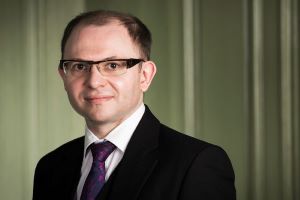
While this did not reflect poorly on the standard of teaching, I became aware of certain attempts from some to ‘manage my expectations’ once I was clear I wanted to study Llw at either of the universities of Glasgow or Strathclyde. The more tactful of those would be words hinting the message ‘you should probably pitch for a university with lower entry requirements’. The least tactful was a visiting ‘careers advisor’ at the beginning of my sixth year who in no uncertain terms told me that there was next to no prospect of me getting into either Glasgow or Strathclyde and that I shouldn’t even bother trying! Fortunately I (and a classmate who was given the same ‘advice’) resolved to prove her wrong and around 12 months later I was a law student at Glasgow (my classmate enrolled) at Strathclyde.
The other key aspect of my time at high school was the growing realisation that I was gay. This was in the 1990s and the world really felt like a different place then, probably in no small part to the infamous legislation called “Section 28” [Section 2A of the Local Government Act 1986] – Margaret Thatcher’s prohibition on the “intentional promotion of homosexuality” in schools or other aspects of local government. There was no representation of non-heterosexual life in mainstream media, save for the occasional scandal (including suggestions of a “gay mafia” in the Scottish legal profession as the aftermath of Operation Planet continued to resonate). A common playground insult was “poof” – a particularly humiliating barb. As a young person realising you were gay in a world well before the advent of the web (never mind social media), you often felt like the only gay person in the world.
While university allowed me a way of meeting other LGBT people, and society was making more tolerant noises about gay people at the turn of the 21st Century, palpable stigma and intolerance remained. When I was doing the rounds with the recruitment agencies scoping out NQ positions in the mid-2000s I initially did not get invited to a single interview for any post I was interested in. I came to learn the agent’s view on why that was: what did I expect when I had on my CV that I was on the board of directors of the ‘Glasgay! Festival’? It appeared to make no difference that this was a professional and well-regarded arts organisation supported by Creative Scotland. As soon as I dropped all reference to ‘gay’ from the description of that organisation I immediately started to get interviews. This gave me two concerns: there was a body of the legal profession who would not consider hiring a gay member of staff; and that to ‘fit’ in pursuing my career I would have to conceal that part of myself. I was angry that I was being discriminated against and I was angry that I went along with it to try to fit in.
When I came to Faculty a couple of years later I was not sure what to expect from this, a very old, institution (in many respects part of the Scottish establishment), or the attitudes it might have. My own experience has been that an absence of family connections in the law, or connections from private schooling has not prevented me from establishing myself as a part of Faculty and in establishing a practice in my preferred area(s) of law. The job (and indeed the advocacy training during devilling) can be demanding, and there are moments when things are not easy, but the collegiate spirit of members of Faculty to each other has, for me, always been there.
It is striking to me that in my years at Faculty I cannot recollect having ever been asked what school I went to, or what family or other social connections in the law I had. In my experience people at Faculty are interested in your skills and attributes, not adornments like the colour of your school tie. More recently, my lack of such adornments and hereditary ‘connections’ was similarly not a barrier to me becoming a King’s Counsel.
In a similar vein, I have never perceived anything to suggest that my sexual orientation makes any difference whatever to my place at Faculty. What statistics perhaps do not tell you is that Faculty is and really always has been a broad collection of personalities which has always included something of an ‘anarchic streak’. While I’m not sure anyone would describe me as being an anarchist, it makes the broader point that there is space at Faculty for those who think or who are a little different, or who are not part of the mainstream.
The same point was made to me by my friend and colleague, the late Derek Ogg QC, who was a fearless campaigner of LGBT equality during less tolerant times than when I was entering the profession. Derek’s hugely successful career at the earliest stages in the 80s and 90s was possible then due to (in addition to his exceptional skill) the freelance nature of an Advocate’s work. The Advocate needed only to attend with the client in consultation and then at court and did not need to fit in at the instructing solicitor’s firm in the way that might be expected of an employed solicitor, or prospective partner.
In my experience, Faculty is a place where you can be yourself.
I was born in Dumfries into a family of Travelling Showpeople. I continued to travel with my family until the age of 11, when we settled in Glasgow. This allowed me to attend secondary school uninterrupted. The University of Glasgow ran a summer school programme to encourage children from non-traditional schools to attend university, which is where I attended my first law lecture.
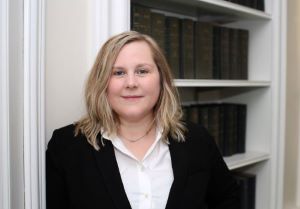
Despite worrying that I would not fit in, I feel at home here at the Faculty of Advocates. There is a genuine sense of purpose that I have not found elsewhere. The building is full of people who are passionate about their work. The hours are long, and sleep is often elusive, but I have built a practice that I thoroughly enjoy. I get to work with remarkable colleagues and I wish I had done this sooner.
I grew up in Edinburgh, where I was educated entirely in the state sector. I was the child of a single parent, the first in my family to go to university and so I did not really have an academic role model, or an idea of what university education would entail, let alone a career in the law. However, once I came to understand what an Advocate was, I was pretty certain that in the fullness of time I wanted it to be the career for me and, from what I knew about the work, I felt that I should be capable of it.
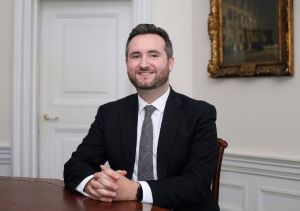
How was that to be achieved? Was the Faculty of Advocates not predominantly an organisation of privately educated individuals from far more privileged backgrounds than I? How else could anyone afford to take nine months off without paid employment to train for the role? Also, as a gay man, would I experience prejudice in this conservative and traditional organisation?
How wrong I was. While there is certainly some truth to the historical demographic make-up of Faculty, for several years now it has taken a keen interest in expanding its membership to become as reflective as possible of Scottish society as a whole. I was therefore encouraged and able to apply for one of Faculty’s various scholarship programmes, contributed to by Members, with a focus on widening access to those from ‘non-traditional’ backgrounds. The Lord Hope Scholarship contributed greatly to my being able to undertake the ‘devilling’ process of training to become an Advocate. I was also encouraged in my journey by the fact that my devilmaster, who had achieved great things in his career already, was from a similar socio-economic background to myself. “If you can’t see it, you can’t be it.” I could “see it” and so I knew I could “be it” too.
Coming to the Bar has been the best decision I have ever made. The work is incredibly varied and stimulating and the rewards, both professional and personal, really are unparalleled. No two days are ever the same. I can honestly say I have never experienced or been aware of any prejudice directed towards me resulting from my background or indeed my sexuality. On the contrary, my diversity has in many instances been an advantage. It is something that allows us to see the world and the plight of others at times in subtly different ways. Diverse voices and diversity of life experience can lead to better discussions, decisions and outcomes. Faculty’s motto – “Suum Cuique” – has been translated in a number of ways, often as “To each his own”. However, I like to think of it as having a certain resonance to equality and diversity. Each of us indeed have our own idiosyncrasies. Individuality is what Faculty is all about.
I didn’t want to be a lawyer. I wanted to be a teacher, like my parents, and then I wanted to be a social worker. I had it planned. I was going to Lancaster University to do a degree in sociology. My mother had other ideas. I ended up in Cambridge, studying history. I was the first generation in my family to go to university. In my third year I changed to law. By the end of the first lecture I was hooked.
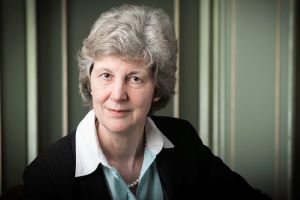
It was a fascination for people’s stories and the impact of societal rules and norms on individuals that got to me. I loved the study and have relished the practice of law ever since.
Not that this was plain sailing. An adventure took Kevin and I, married just two years, to the mountains of Iraqi Kurdistan and, for me, to teaching English to young people who had never encountered a native English speaker before. “Sir,” (what did you call a female English lecturer), “did you marry for love?” It was a learning experience about other perspectives on life and on communication.
Back to life in Oxford and to practice as a solicitor on the High Street, to being married now to a clergyman, to arrival of children, and then as a bombshell, Kevin was offered a job in Musselburgh. Scots law was something of a challenge, but newly requalified, with some experience in the sheriff courts, I found myself working with the British Agencies for Adoption and Fostering, and devising courses on child protection for social workers at Dundee University.
There is only so long a practitioner can talk about law, and desperate for real practice I found myself talking to the then Clerk at the Faculty of Advocates, one Paul Cullen, who was both practical and encouraging. What was less encouraging was finding, after I had handed in my notice for my job, taken three Faculty exams and prepared for another two, that the examination committee had decided they wanted not five, but seven, papers from me (in addition to the usual three practice papers), and had not taken the trouble to tell me. I owe a debt to one of my devil masters Gerry Moynihan and the then Dean of Faculty Alan Johnston for rescuing me, but it started my Faculty career on a slightly raw note.
The practice of law itself has been exhilarating. It has stretched from cross-examining the notorious Professor Meadows (Munchausen by Proxy, implicated in the wrongful conviction of Sally Clark) in Kilmarnock Sheriff Court, to junioring in the Privy Council in Downing Street, in a challenge to the Scottish Parliament’s first Act, amending the Mental Health (Scotland) Act 1984, to keep dangerous men in Carstairs. Then there was the scope to develop the Family Law (Scotland) Act 1985 and address issues in child law. It all left me with a desire to take silk, to argue cases at a senior level, particularly in family law. I had to wait until 2007 for that privilege. In the meantime, appointment as a part-time sheriff gave a new perspective on the law.
I have enjoyed practice at the senior bar. It has brought the opportunity to argue cases in the Inner House and the Supreme Court. As a practising Christian I took particular pleasure in a successful challenge to Covid Regulations closing churches. The establishment of a Court of Session Family Court has seen realisation of a long-standing ambition for family law in Scotland. I am grateful to my fellow advocates for the inspiration they provide and for friendship and support, especially when I lost my husband last year.
This legal life has all been something of an accident, but perhaps it turned out well.